The Business of Farming in New Hampshire

4,000 Farms, a New Generation, and a Tradition of Adapting to Change
Chances are high that on your next hike through a New Hampshire forest, you’ll encounter at least one stone wall. More than 12,000 miles of these man-made walls crisscross the state, skeletons of what was once part of New Hampshire’s farming industry. Today, they’re a tangible reminder of the resilient and adaptive spirit New Hampshire farmers have always had.
By the mid-1800s, much of New Hampshire’s landscape had been cleared for farming. During the Merino Sheep Boom, New Hampshire became one of the country’s most productive sheep farming states, clearing nearly 80% of its forests to make room for pastures, using the stone walls to keep flocks contained.
Then, cheaper wool from the West changed the economics of the industry and simultaneously, the landscape of the state, again. As sheep farming declined, the forests slowly reclaimed the land.
New Hampshire’s farmers shifted to dairy, poultry, livestock, orchards, vegetables, maple and other ways of making a living from the land. It was an early lesson in something farmers here still know well: conditions constantly change, and successful farms have to change with them.
Did you know? Nearly 4,000 farms operate in New Hampshire and cover more than 400,000 acres.
More than 80% are family farms, and agriculture generates more than $249 million a year in the state. Some of the most interesting numbers, however, aren’t about what New Hampshire farms produce. They’re about who is doing the producing. The average New Hampshire farmer is 59 years old. At the same time, more than 2,500 people identified as new or beginning producers in the USDA’s latest Census of Agriculture (2022).
Our state’s agriculture is simultaneously getting older while ushering in a new generation. Whether taking over an existing family farm, starting from scratch, or making an existing operation more sustainable, farmers today have to know more than simply how to grow crops and raise animals. Farming requires knowing how to run a successful business, manage risk, and adapt when the plan changes.
That’s also why farmers don’t do this work in isolation. UNH Cooperative Extension and the NH Small Business Development Center (NH SBDC) are two parts of a larger network helping New Hampshire farmers navigate both sides of the equation.
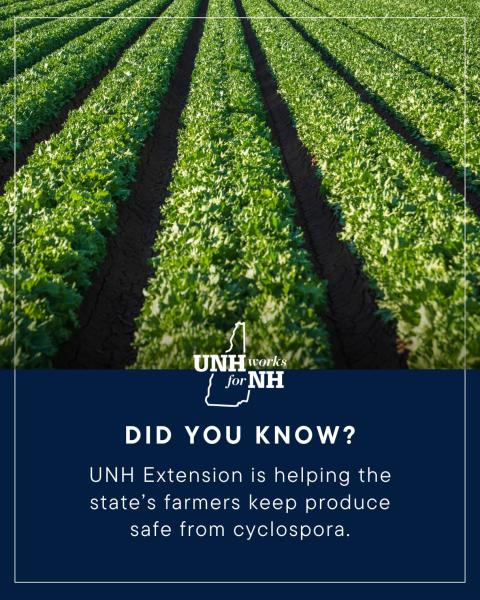
UNH Cooperative Extension brings agricultural knowledge to farms and communities across the state. Its specialists work with farmers on agricultural business management, crop and livestock production, soil and pest management, food safety, marketing, succession planning and other challenges that come with farming.
NH SBDC brings small business expertise. Its advisors help New Hampshire businesses with pricing, cash flow, marketing, hiring, financing, growth strategy and the many decisions involved in building and sustaining a business.
Together with the New Hampshire Department of Agriculture, Markets & Food, USDA programs and other partners, these organizations give farmers somewhere to turn for any challenge they encounter.
In farming, the answer isn’t always obvious.
It may surprise you to know that farming is only a part of the job! A successful farm has to produce something people want to buy. It also has to make the numbers work. “You’ve got to be the marketer, wholesaler, website developer, bookkeeper, and the one to produce the crops, product, or care for the animals,” says Kelly McAdam, Food & Agriculture Program Team Leader with UNH Cooperative Extension. For smaller and family-run farms, many of those responsibilities fall to the same few people.
Farmers also face a unique set of risks
In early spring 2023, a late freeze struck New Hampshire just as many fruit crops were at their most vulnerable stage. Blossoms that should have become apples, peaches, cherries, pears and berries were damaged or lost. Later that year, heavy rain and flooding brought another round of losses. And, while crops can disappear overnight, the expenses don’t.
The combination of thin margins, unpredictable weather, rising costs, and the everyday demands of running a business makes adaptability more than a nice-to-have quality for farmers. It can determine whether or not the farm survives.
Kristin and Keith Charlton of Firefly Farm in Temple understand the importance of building one step at a time. They started more than a decade ago, pursuing a longtime dream of a healthier, more rural lifestyle while still working traditional jobs that required frequent travel. The gradual pace and slow progress taught them to stay focused on achievable milestones as they moved forward.
“It takes real passion to sustain a successful farm,” they say. Today, their youngest son works alongside them, adding another generation to a farm that started as a dream and has grown over time. Their story is one of many examples of how people find their way to farming in New Hampshire. It paints a picture of how farming welcomes in individuals of all ages, backgrounds, and diverse ideas on what a successful farm looks like.
Knowing Where to Turn
Every state has at least one land grant university. In New Hampshire, UNH is ours. Cooperative Extension is part of UNH’s mission of bringing research and education into communities, with offices and specialists serving all 10 New Hampshire counties.
For farmers, this means knowing they don’t have to go it alone. They can access guidance on agricultural business management, production, food safety, crop and livestock health, pest management, marketing and recordkeeping, as well as connections to other agricultural programs.
Jesse Wright, Field Specialist in Agricultural Business Management with UNH Cooperative Extension, shares that variety is one of the things she loves most about her work. “One day I’m working with a client on their QuickBooks, and the next I’m working with a production specialist to set up one of our experiential events where farmers see how other farms are doing things and learn from each other directly.” The issues farmers bring to Extension often cross the line between agriculture and business.
That’s where the partnership with NH SBDC comes in.
NH SBDC provides confidential, no-cost business advising to small businesses throughout New Hampshire, including farms and agricultural businesses. The assistance isn’t limited to people writing their first business plan. “The SBDC offers support throughout a business’ entire lifecycle, not just startups,” says NH SBDC State Director Liz Gray. For a farmer, this might look like working on pricing, understanding cash flow, evaluating a new revenue stream, hiring employees, thinking through marketing or making decisions about growth.
Collaboratively, they determine who can provide the needed perspective.
Jesse describes a recent example involving an SBDC Advisor working with a client on leasing farmland. The Advisor helped the business owner think through leasing basics and language and connect the client with legal expertise. Then, they reached out to the Extension to work through the unique set of considerations for farmland leasing. Through the Extension, they gained agriculture-specific information and identified additional factors for the farmer to consider.
Rather than expecting one person or organization to have every answer, farmers can draw on both. For new producers and established farms alike, knowing where to turn can be as valuable as knowing what to do.
What will the next New Hampshire farms look like?
New Hampshire farmers have never had the luxury of standing still. The soil, climate, markets, and tools have all changed since those first stone walls went up around a pasture full of Merino sheep. What hasn’t changed is the adaptive, resilient spirit underneath each success story.
Modern farming means being as fluent with a spreadsheet as a hayfield and knowing exactly who to call when you need a hand. For centuries, New Hampshire farming has taken commitment, resiliency, and the ability to decide what’s working, what needs to change, and adjust accordingly for what’s coming next.
The best news is that today’s farmers don’t have to figure it out alone.
Contact UNH Cooperative Extension
Find your local Extension Office:
https://extension.unh.edu/facilities
For agriculture business-specific needs, contact Kelly McAdam:
Contact NH SBDC
Find an Advisor & Connect to Services:
Together with the New Hampshire Department of Agriculture, Markets & Food, USDA programs and other partners, they are part of a statewide network supporting the future of New Hampshire agriculture.
SBDC Farm Success Stories
Laurianne Bennett of Bennett Family Farm: Veteran-Owned, Woman-Powered, Rooted in Purpose. https://www.nhsbdc.org/blog/2025/08/client-story-bennett-family-farm
Holly Philbrick of Emery Farm: A Creative COVID Success Story
https://www.nhsbdc.org/blog/2020/11/covid-creativity-emery-farm